
Table of Contents
- Signs of Dry Skin in Dogs You Should Not Ignore
- Dog Dry Skin Home Remedies That Work
- How to Soothe Dog Dry Skin Naturally: Step-by-Step
- Preventing Dog Dry Skin in Winter
- Safety Warnings: What Never to Put on Your Dog
- Breed-Specific Skin Sensitivities
- When to See a Veterinarian
- Frequently Asked Questions
Last Updated: October 2, 2026
Signs of Dry Skin in Dogs You Should Not Ignore
Dry, flaky skin is one of the most common reasons pet owners search for how to soothe dog dry skin naturally. At Sunwood Growers, we believe in natural care without harsh chemicals. The trick is knowing what you are actually looking at.
Watch for these signs:
- White flakes in the coat or on bedding
- Constant scratching, licking, or chewing
- Red, inflamed patches
- Dull, brittle fur
- Visible dandruff along the back
When Flaking Is Normal and When It Is Not
A little flaking in winter is common. It often clears up on its own. But flaking that lasts more than a week, spreads, or comes with redness needs attention. Those are signs of a deeper problem.
Dog Dry Skin Home Remedies That Work
Most dog dry skin home remedies work by restoring moisture and calming irritation. The American Kennel Club's guide to dog skin problems notes that dry skin often traces back to diet, environment, or grooming habits. What most listicles skip is the how: the exact steps, the right amounts, and the trade-offs that separate a remedy that helps from one that backfires. Here is the deeper version.
Colloidal Oatmeal Baths
Colloidal oatmeal is finely ground oats that suspend in water, releasing beta-glucans and avenanthramides that coat the skin and calm itching. It is not the same as dumping breakfast oats in the tub.
Step-by-step:
- Draw a lukewarm bath, around 98°F to 100°F. Hot water strips oils and worsens dryness.
- Add colloidal oatmeal powder according to the package (typically 1 cup per 10 gallons of water) and swirl until the water looks milky.
- Let your dog soak for 10 minutes, gently ladling water over the back and flanks.
- Rinse well with lukewarm water. Leaving residue can dry into a crust.
- Pat dry with a towel, do not rub, and follow with a pet-safe moisturizer while the skin is still slightly damp.
Coconut Oil and Other Safe Topical Oils
Coconut oil is safe for most dogs in small amounts and contains lauric acid, which has mild antimicrobial properties. The key is application technique, not just the oil itself.
Step-by-step:
- Start with a pea-sized amount for small dogs, a teaspoon for medium, and up to a tablespoon for large breeds.
- Warm it between your palms until it liquefies.
- Massage into dry patches in the direction of the fur, not against it, so you reach the skin without matting the coat.
- Leave it on for 5 to 10 minutes.
- Wipe off the excess with a warm cloth so your dog does not lick too much. Ingesting large amounts can cause loose stools.
Omega-3 Fatty Acids and Diet
Omega-3 fatty acids support the skin barrier from the inside by reducing inflammation and improving the lipid layer that holds moisture in. Fish oil is the easiest source, but dosing matters.
Chamomile or Green Tea Soaks
Both are gentle anti-inflammatories that can calm irritated paws and bellies. Steep two tea bags in a quart of hot water, cool completely, then pour over the affected area or soak paws for 5 minutes. Do not use sweetened or flavored blends, plain chamomile or green tea only. Pat dry and follow with a pet-safe balm.
| Remedy | How to Use | Best For | Watch Out For |
|---|---|---|---|
| Colloidal oatmeal bath | Soak 10 min at 98-100°F, rinse, pat dry | Full-body flaking | Open sores, yeast smell |
| Coconut oil | Pea-sized to 1 tbsp, massage in, wipe excess | Localized dryness | Over-licking, loose stools |
| Fish oil | 20-55 mg EPA+DHA per lb daily, split | Overall coat health | Pancreatitis, loose stools |
| Chamomile/green tea soak | Steep, cool, pour or soak 5 min | Paws, belly irritation | Sweetened blends |
| Humidifier | Run near sleeping area, 40-50% humidity | Winter dryness | Mold if not cleaned |
How to Soothe Dog Dry Skin Naturally: Step-by-Step
Follow these steps in order. Most dogs see improvement within two weeks.
- Check for fleas and ticks. Parasites cause most itching. Treat them first.
- Switch to a gentle shampoo. Pick one with oatmeal or aloe. Skip harsh fragrances.
- Bathe every 4-6 weeks. Too often strips natural oils. Too rarely lets dirt build up.
- Add a fish oil supplement. Start small and increase slowly.
- Brush daily. This spreads natural oils through the coat.
- Run a humidifier. Dry indoor air pulls moisture from skin.
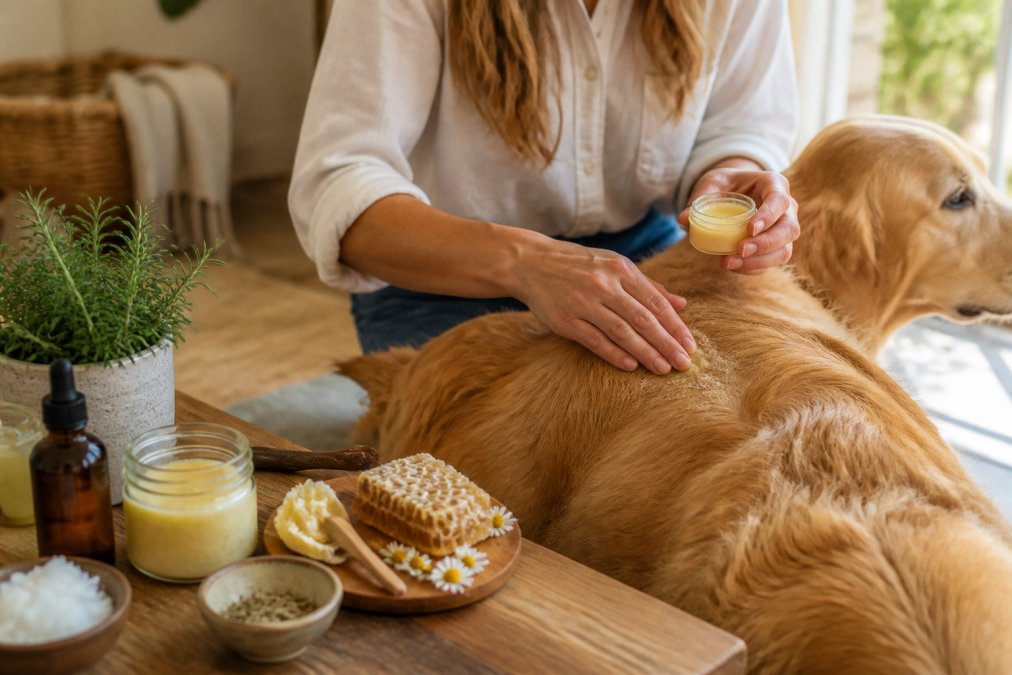
- Apply a natural salve to rough patches. A small-batch healing salve made with clean ingredients can provide thoughtful care for hot spots and cracked skin.
Preventing Dog Dry Skin in Winter
Preventing dog dry skin in winter comes down to two things: moisture and warmth. Indoor heat pulls humidity from the air. That dries out skin fast.
Try these habits:
- Keep indoor humidity between 40% and 50%
- Use a humidifier in the room where your dog sleeps
- Never bathe more than once a month in winter
- Add a little extra fat to meals, like salmon oil
- Cover thin-coated breeds with a sweater outdoors
Safety Warnings: What Never to Put on Your Dog
Some natural remedies are toxic to dogs. This is the part most guides skip. The ASPCA's toxic plant and substance database lists dozens of common household items that harm pets.
Never use these on your dog's skin:
- Tea tree oil
- Eucalyptus oil
- Citrus essential oils
- Undiluted apple cider vinegar
- Human lotions with fragrance or alcohol
Breed-Specific Skin Sensitivities
Most guides give a generic list of breeds prone to dry skin. What they miss is why each breed struggles and what to do differently. Knowing your breed's weak spots helps you act faster and avoid remedies that backfire.
- Bulldogs and Pugs: Deep wrinkles trap moisture and yeast. Dry skin often starts in the folds, not the coat. Clean folds daily with a vet-approved wipe, dry thoroughly, and use a barrier balm, never a heavy oil that seals in moisture. If the fold smells yeasty or turns red, that is a vet visit, not a home remedy.
- German Shepherds: Prone to allergies and hot spots, especially on the rear and tail base. Dry skin here is often the first sign of a food or environmental allergy. Start with an omega-3 supplement and a gentle oatmeal bath, but if hot spots keep returning, ask your vet about allergy testing rather than cycling through topicals.
- Siberian Huskies: Their double coat traps dry indoor air against the skin in winter. Do not shave them, the undercoat insulates and protects. Instead, brush daily to spread natural oils, run a humidifier, and add salmon oil to meals. Bathe no more than once a month in winter.
- Golden Retrievers: Often develop seasonal allergies that show up as dry, flaky skin in spring and fall. Keep a simple log of flare-ups by month so you and your vet can spot the pattern. A chamomile soak can calm flare-ups between vet visits.
- Dachshunds: Thin coats leave skin exposed to dry air and sun. A lightweight pet sweater outdoors in winter and a humidifier indoors make a bigger difference than most topicals. Check ears and belly regularly, since these areas dry out first.
- French Bulldogs: Similar to English Bulldogs but with tighter skin and more skin-fold dermatitis. They also overheat easily, so skip warm baths and opt for lukewarm oatmeal soaks instead. Coconut oil works well on small patches but not inside folds.
- Boxers: Short coats and a tendency toward environmental allergies mean dry skin often appears on the chest and paws. Wipe paws after walks to remove allergens, and use a green tea soak for irritated paws.
- Poodles and Poodle Mixes: Curly coats trap dead hair and dander against the skin. Without regular brushing and trims, dry skin turns into matting and hot spots. Brush every other day and book a professional groom every 6 to 8 weeks.
When to See a Veterinarian
Home remedies work for mild dryness. They do not fix infections, allergies, or thyroid problems. Call your vet if you notice any of these:
- Scratching that keeps your dog awake
- Hair loss in patches
- Red, swollen, or warm skin
- A bad smell
- No improvement after two weeks of home care
Frequently Asked Questions
How can I moisturize my dog's dry skin?
Start with a colloidal oatmeal bath to calm irritation and support the skin barrier, then apply a small amount of coconut oil or a pet-safe salve to damp skin. Add an omega-3 supplement to your dog's food for internal support. Avoid human lotions, which contain fragrances and preservatives dogs should not lick. Repeat baths no more than once a week so you do not strip natural oils.
What are the safest natural oils for dog dry skin?
Coconut oil and fish oil are the most widely used. Coconut oil works as a topical moisturizer and has soothing properties for itchy skin. Fish oil, rich in omega-3 fatty acids, supports coat health when added to food. Olive oil is generally safe in small amounts but can cause stomach upset in larger doses. Always introduce any oil gradually and watch for digestive upset or skin reactions.
How do I know if my dog's dry skin is an allergy?
Dry skin from low humidity or poor diet tends to affect the whole body evenly. Allergies usually cause concentrated itching around the paws, ears, face, or belly, often with redness or hot spots. If your dog scratches constantly, chews its paws, or develops recurring ear infections, allergies are more likely. A veterinarian can confirm with a proper exam or allergy testing.
How often should I apply natural remedies to my dog's skin?
For mild dryness, a coconut oil or salve application once daily works well. Colloidal oatmeal baths should be limited to once a week to avoid drying out the skin further. Omega-3 supplements take four to six weeks to show visible results, so stay consistent. If you see no improvement after a month of home care, book a veterinary consultation to rule out underlying conditions.
Dry, itchy skin wears a dog down, and it wears you down too. Sunwood Growers makes small-batch pet healing salves with pure, honest ingredients, crafted in California to calm dry patches and support coat health. Our farm-to-skin approach means every jar is made to work better and last longer. Shop now and give your dog the gentle, natural relief they deserve.
0 comments