
Table of Contents
- The Trade-Off: Gentle Care Versus Long-Lasting Performance
- What Makes Pet-Safe Ingredients Actually Different
- How to Read Pet Product Ingredient Labels for Transparency
- Ingredient Sourcing Verification: What Ethical Actually Means
- How to Choose a Pet Balm That Delivers Real Results
- Natural Pet Product Shelf Life and Cost Per Use
- Why Gentle and Effective Aren't Mutually Exclusive
- Frequently Asked Questions
Last Updated: October 5, 2026
The Trade-Off: Gentle Care Versus Long-Lasting Performance
When you're shopping for pet care products, you face a choice that feels impossible. Do you pick something with pure, recognizable ingredients that feels safe but might not last as long? Or do you choose a product engineered for durability that you're less sure about? At Sunwood Growers, the truth is simpler than most brands admit: gentle effective pet care doesn't have to mean sacrificing results.
The real trade-off isn't between gentle and effective. It's between understanding what you're buying and guessing. A product with transparent ingredient sourcing isn't a contradiction. It's the standard we should expect.
Most pet products fall into two camps. One side emphasizes natural ingredients and minimal processing, appealing to owners who worry about chemicals. The other side focuses on performance metrics: shelf life, application frequency, how long the benefits last. The best products, and the ones worth your money, deliver both. They're made with ingredients you recognize, from sources you can verify, and they actually work when your dog needs them most.
What Makes Pet-Safe Ingredients Actually Different
Pet-safe ingredients aren't a marketing category. They're a practical reality. Dogs metabolize substances differently than humans do. Their skin has a different pH balance. What's gentle for you might irritate their coat, and what seems mild might accumulate in their system over time.
The difference starts with what you avoid. Synthetic fragrances, sulfates, parabens, and artificial preservatives aren't inherently toxic, but they're also not necessary. Many pet owners report that switching to products with minimal, recognizable ingredients reduces skin irritation and itching. Your dog can't tell you what bothers them, you have to choose based on what's actually in the bottle.
Recognizable ingredients matter because you can research them. If a label lists "lavender oil," you know what that is. You can check whether it's safe for pets (it is, in diluted forms). If it says "natural fragrance," you have no idea what's inside. That opacity is the real problem. A product claiming to be natural while hiding its ingredients behind vague terms isn't transparent. It's just different marketing.
The most effective pet-safe products use ingredients with a track record. Plant-based oils like coconut and jojoba have been used for animal care for years. Shea butter, beeswax, and calendula extract show up in veterinary formulations. These aren't trendy, they're proven. When a product lists them clearly, you're not buying a promise.
How to Read Pet Product Ingredient Labels for Transparency
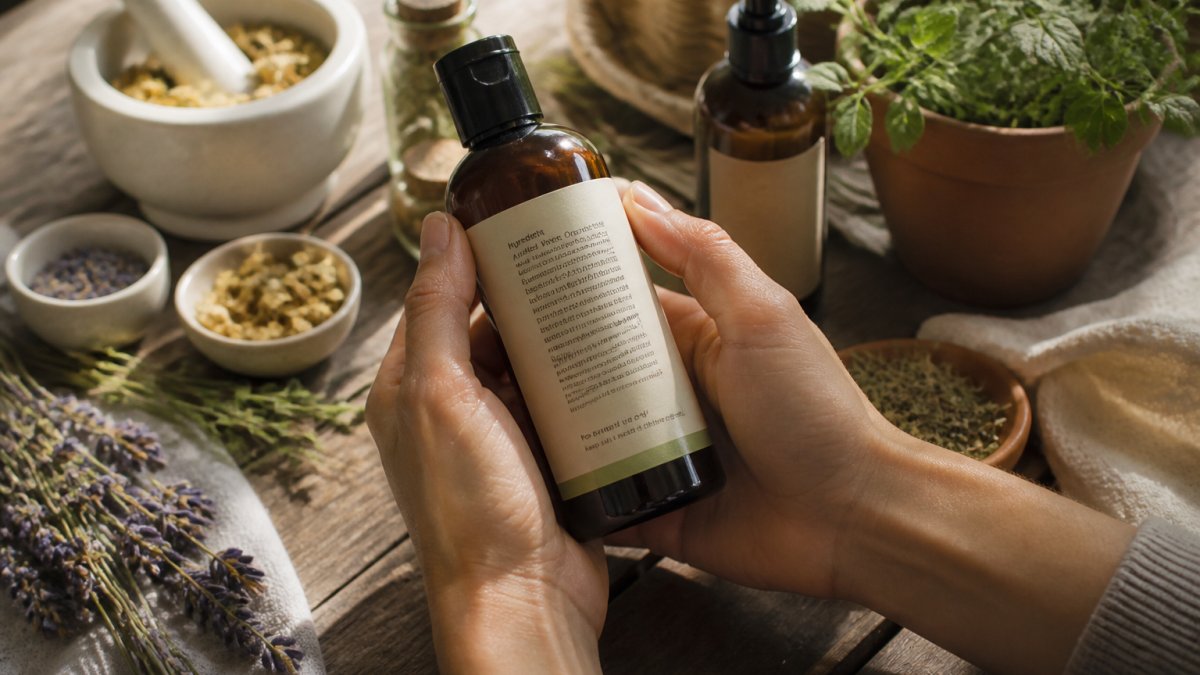
Reading a pet product label isn't complicated once you know what to look for. The ingredient list tells you almost everything you need to know about whether a product is actually gentle and effective.
Start with the order. Ingredients are listed by weight, from most to least. If water is first, the product is water-based. If an oil is listed first, it's oil-based. This matters because it changes how the product works on your dog's skin. Water-based products absorb faster.
Next, count how many ingredients there are. More isn't better. A balm with 8-12 ingredients is usually more focused than one with 30. Fewer ingredients mean fewer potential irritants and clearer accountability if something causes a reaction. You can actually trace which ingredient might be the issue.
Look for specificity. "Plant extract" is vague. "Calendula flower extract" is specific. "Essential oil blend" hides what's actually in there. "Lavender oil, chamomile oil, and cedarwood oil" tells you exactly what you're getting. Brands that hide ingredient details often do it because they're using cheaper versions or they're not sure themselves.
Check for preservatives, but understand why they're there. A product without any preservative system will go rancid or grow mold. Natural preservatives like vitamin E or rosemary extract work, but they have shorter shelf lives. Synthetic preservatives like methylisothiazolinone last longer but carry more concern.
Finally, look for what's NOT there. No artificial dyes, no synthetic fragrance, no mineral oil. These absences matter more than marketing claims about what is included.
Ingredient Sourcing Verification: What Ethical Actually Means
"Ethically sourced" and "sustainable" are marketing terms that mean almost nothing without proof. A brand claiming ethical sourcing should tell you where ingredients come from and how they're verified. Without that, it's just a story.
Real ingredient sourcing verification means knowing the farm, the harvest method, and the supply chain. Some brands work directly with growers. Others buy from distributors. Some can trace every batch. Others can't. The difference in product quality and consistency is real.
When you see a product labeled as having "California-sourced ingredients" or "locally harvested botanicals," ask what that actually means. Does the brand own the land? Do they contract with specific farms? Can they trace the harvest date? Sunwood Growers, for example, emphasizes its California inspiration and farm-to-skin philosophy, which means understanding where ingredients originate and how they're processed matters to their entire approach.
Transparency about sourcing also tells you about shelf life and potency. Fresh, recently harvested ingredients have more active compounds. Ingredients stored for months lose effectiveness. A brand that sources locally and processes quickly will have more potent products.
The most reliable sourcing claim is one backed by third-party verification or certification. Organic certification, Fair Trade certification, or specific supply chain audits give you something concrete to check.
How to Choose a Pet Balm That Delivers Real Results
Choosing a pet balm means matching the product to your dog's actual need, not just picking the one with the nicest label. A balm for dry patches works differently than one for paw protection, even if they look similar.
Start by identifying what you're treating. Dry, flaky skin needs something that moisturizes and protects. Paw pad damage needs something that creates a barrier and heals faster. Hot spots need something that soothes and prevents licking. The best balm for one problem might not work for another.
Next, consider application frequency. A balm you need to reapply every day is less practical than one that lasts three days, especially if your dog spends time outdoors or in water. This is where ingredient quality and formulation matter.
Test on a small area first. Even with pure ingredients, some dogs have sensitivities. Apply a small amount to a patch of skin and wait 24 hours. If there's no redness, itching, or swelling, it's safe to use more broadly. This simple step prevents expensive mistakes and keeps your dog comfortable.
Check the texture. A balm should be firm enough to stay where you apply it but soft enough to spread without tugging on fur. If it's too hard, it won't absorb. If it's too soft, it'll just rub off.
Finally, track results. Does the dry skin improve within a week? Does the balm stay on for the duration you expect? Is your dog licking it off constantly, or does it stay put? Real results matter more than ingredient lists. A product with perfect ingredients that doesn't help your dog isn't worth buying.
Natural Pet Product Shelf Life and Cost Per Use
The price tag on a natural pet product often feels high compared to mass-market alternatives. Understanding why requires looking at shelf life and cost per use, not just the upfront price.
A product that lasts longer per application costs less over time, even if the bottle costs more. If a balm costs more but you use half as much per application and it lasts three times longer on your dog's skin, the actual cost per use drops dramatically.
Shelf life also matters. A natural product without synthetic preservatives might last 12 months. A conventional product might last three years. If you're buying for one dog, the natural product's shorter shelf life is fine. If you're buying for multiple pets or using the product slowly, you need something that stays stable longer. This is the real trade-off: pure ingredients often mean shorter shelf life, which means you need to use the product before it degrades.
Storage affects shelf life too. A product stored in a cool, dark place lasts longer than one sitting in direct sunlight or heat. Most natural products need to be stored away from light and at moderate temperatures. This isn't a flaw, it's just part of using less-processed ingredients.
When comparing prices, calculate cost per use. Divide the price by how many applications you get from one container. A $25 balm that lasts 60 applications costs about 42 cents per use. A $12 balm that lasts 20 applications costs 60 cents per use. The more expensive product is actually cheaper in real terms.
Why Gentle and Effective Aren't Mutually Exclusive
The belief that gentle means ineffective is the biggest myth in pet care. It comes from the assumption that stronger chemicals are always more powerful. They're not. They're just different.
A gentle product with pure ingredients can work as well as a harsh one because it's designed to work with your dog's skin, not against it. When you remove irritating chemicals, the skin can actually heal. When you use ingredients that match your dog's natural pH and skin chemistry, they absorb better and last longer.
The science is straightforward. Your dog's skin has a protective barrier made of oils and beneficial bacteria (Skin Barrier Function). Harsh chemicals strip that barrier, which causes irritation and requires more frequent application. Gentle ingredients support that barrier, which means your dog's skin stays healthier and the product's benefits last longer. That's not just safer.
Effectiveness also depends on concentration and formulation. A product with the right blend of ingredients that work together will deliver better results than one that just throws in everything that sounds good.
The real choice isn't between gentle and effective. It's between products made with understanding and products made with shortcuts. The best pet care products are made by people who understand how ingredients work together, how they interact with your dog's skin, and what results you should actually expect. That knowledge shows up in transparency and in ingredient sourcing.
Choosing the right pet care product means looking beyond marketing claims to what's actually in the bottle and what it will actually do. When you're ready to move beyond guesswork and choose products backed by real ingredient transparency and proven results, explore natural pet care options that prioritize both safety and effectiveness with us.
Frequently Asked Questions
What ingredients should I look for in a natural pet care product?
Seek recognizable, whole-plant ingredients like calendula, shea butter, and oat extract that have been used safely on animals for years. Avoid synthetic preservatives, artificial fragrances, and harsh surfactants. Check the ingredient list for minimal processing and transparency about where each ingredient comes from. Products with fewer than 10 ingredients tend to be easier to evaluate for safety and effectiveness.
How do I know if a pet balm is actually effective, or just marketing?
Look for products with consistent application guidance. Ask the seller about their sourcing and manufacturing standards; companies transparent about their process tend to stand behind their products' performance.
Does natural pet product shelf life matter if I'm going to use it regularly?
Yes, shelf life affects cost per use and value. Natural products without synthetic preservatives typically have shorter shelf lives, so check the expiration date and storage instructions. Smaller, more concentrated formulations often last longer and deliver better results per application.
Can I patch-test a new pet product safely before full use?
Always patch-test topical products on a small, less visible area of your pet's skin first. Apply a small amount, wait 24-48 hours, and watch for redness, itching, or irritation. If your pet has known sensitivities or allergies, consult your veterinarian before trying any new product. Most gentle, well-formulated balms show no adverse reactions, but individual pets vary in sensitivity, so this step protects your pet and confirms the product is right for them.
0 comments